Your overhead cranes and hoists run shift after shift under load. When something goes wrong, production stops and safety risk rises immediately, and if your compliance record is not current, that risk is on you.
What OSHA Requires for Lifting Equipment
OSHA regulation 29 CFR 1910.179 splits crane and hoist inspection into two types: self-inspections that must be conducted by your in-house team on a frequent basis (daily or monthly depending on your equipment and setup) and annual (or more frequent) third-party inspections. Your facility cannot self-certify its own periodic inspection, no matter how thorough your internal maintenance program is.
What a Periodic Inspection Covers
A full periodic inspection under 29 CFR 1910.179 is thorough, working through the entire system:
- Structural members, checked for deformation, cracking, and corrosion
- Bolts and rivets, checked for looseness
- Lift wheels, sheaves, and drums, checked for wear and cracking
- Load chain, wire rope, lower hooks, and safety latches
- Mechanical components such as pins, safety latches, bearings, shafts, and gears, checked against tolerance
- Brake system parts and linings, checked for wear
- Electrical apparatus such as controller contactors and limit switches, checked for deterioration
- Control pendants and cabling
Depending on the manufacturer and equipment type, the full checklist can include more than 150 individual items. Hooks and chains get their own more frequent cycle on top of that, with daily visual checks and a monthly measurement that should be recorded.
Regular Inspection and Maintenance: What to Put in Place Between Inspections
Depending on your lifting setup, operators or maintenance teams should be conducting visual inspections and recording their findings for items such as:
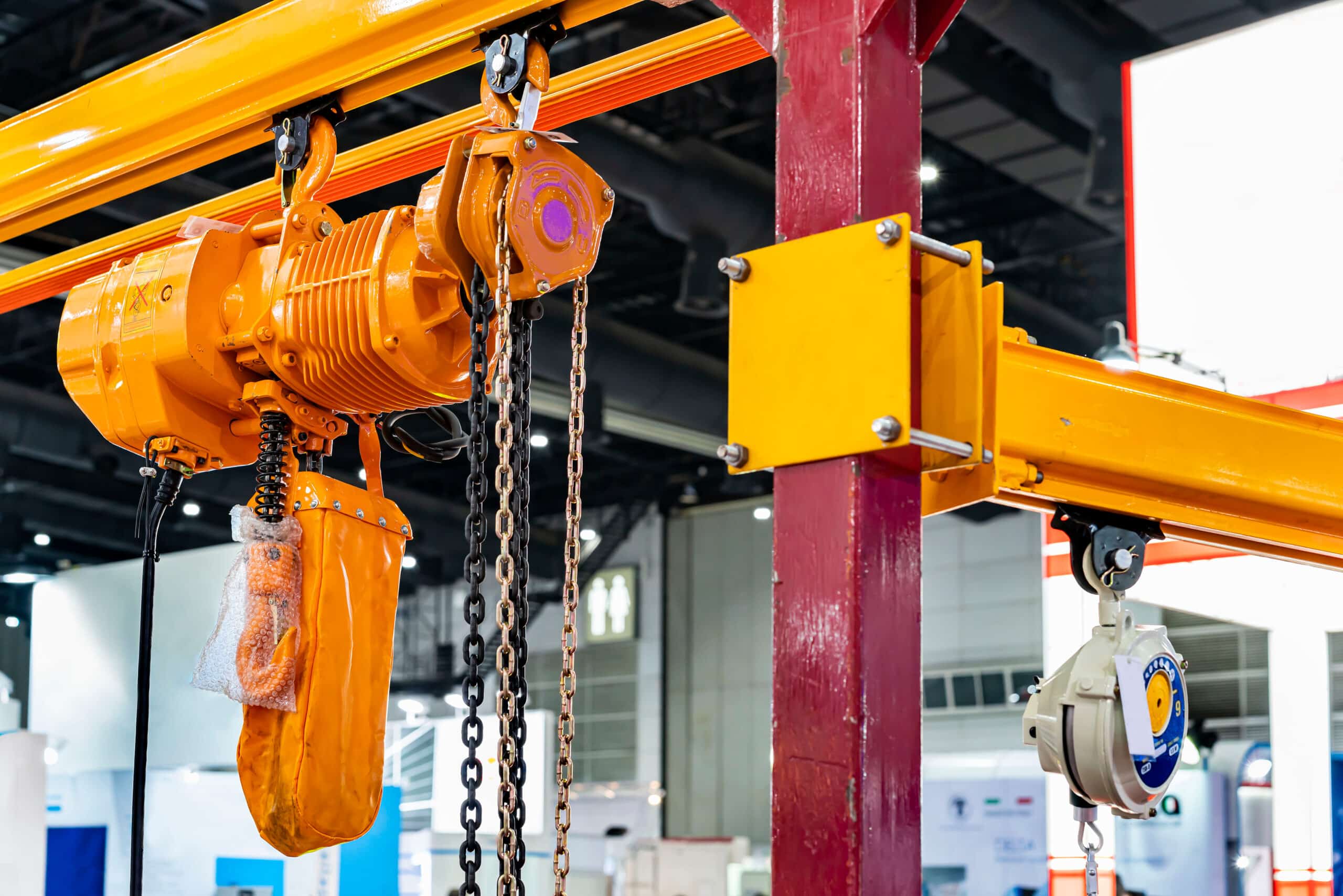
- Chain hoists: Inspect the chain and record measurements at three points
- Wire rope hoists: Apply the same approach to the rope
- Hook blocks: Measure and log the wear
A regular preventative maintenance program can help close the gaps between what your daily or shift checks uncover and your periodic third-party inspections.
Load Testing
Load testing is a separate requirement from inspection. New lifting equipment must be load tested before it goes into service. Equipment that has undergone alterations or major repairs on significant load-bearing components (such as hoist motors, load hooks, and brake systems) must be load tested before returning to service.
This is a point where facilities sometimes run into compliance problems without realizing it. Equipment comes back from repair and returns to operation without a post-repair load test because the return-to-service process does not account for the requirement, or because production pressure overrides the compliance step. If that step was skipped after your last repair, you’re out of compliance no matter when your last periodic inspection was.
Common Hoist and Crane Problems and What Causes Them
Equipment failure is rarely a manufacturing defect. It is almost always a maintenance gap or a way the equipment is being used that it was not built for. Brakes, contactors, chains, and wire rope account for most of what turns up during an inspection, and most of that wear traces back to normal use over time rather than a bad piece of equipment.
Misuse shows up too, and side pulling is the most common example. Hoists are engineered to lift vertically. Pulling a load more than 3 degrees off vertical puts stress on components that weren’t designed to handle it, and it is one of the fastest ways to turn a healthy hoist into a maintenance case. Manufacturers also frequently call for a full teardown and inspection around the ten-year mark regardless of condition, which is worth knowing before a periodic inspection turns up something that feels alarming but is really just the equipment reaching a documented service milestone.
What to Do If Your Facility Is Behind on Inspections
If your facility has not had a periodic inspection on its lifting equipment in over a year, the fastest path to compliance is scheduling one now. The inspection is the first step. If the inspector finds issues, those need to be addressed before the equipment returns to service.
Getting ahead of a compliance gap is significantly less expensive than closing one after an incident forces the question. The inspection cost is defined and predictable. The fine exposure for non-compliance is neither.
Find Hoist & Crane Inspections in Your Area
Independent Electric provides hoist and crane inspections across Kansas, Missouri, and beyond. Our team has been doing this work for decades, and because we are a regional operation rather than a national company scheduling crews on fixed routes, we can typically get to a facility faster when an inspection is needed.
When evaluating your current compliance, here’s what to consider:
- Inspection history: If your facility has not had a periodic inspection in over a year, you are already out of compliance. The question is whether an inspector finds that before you do.
- Documentation: Periodic inspections produce the paper trail your facility needs, and prior reports should stay on file and easy to pull up. Inadequate documentation is one of the most common findings when an inspector visits.
- Equipment age and environment: Older equipment develops problems faster, and so does equipment running hard or sitting in dust and corrosion. Either condition can justify a shorter interval than the standard periodic cycle.
- Repair history: Any equipment that has had repairs performed requires a load test before returning to service. If that step was skipped, the compliance gap exists regardless of when the last inspection was.
Ready to schedule an inspection or discuss a service program? Connect with our experts to schedule your lift equipment inspections!