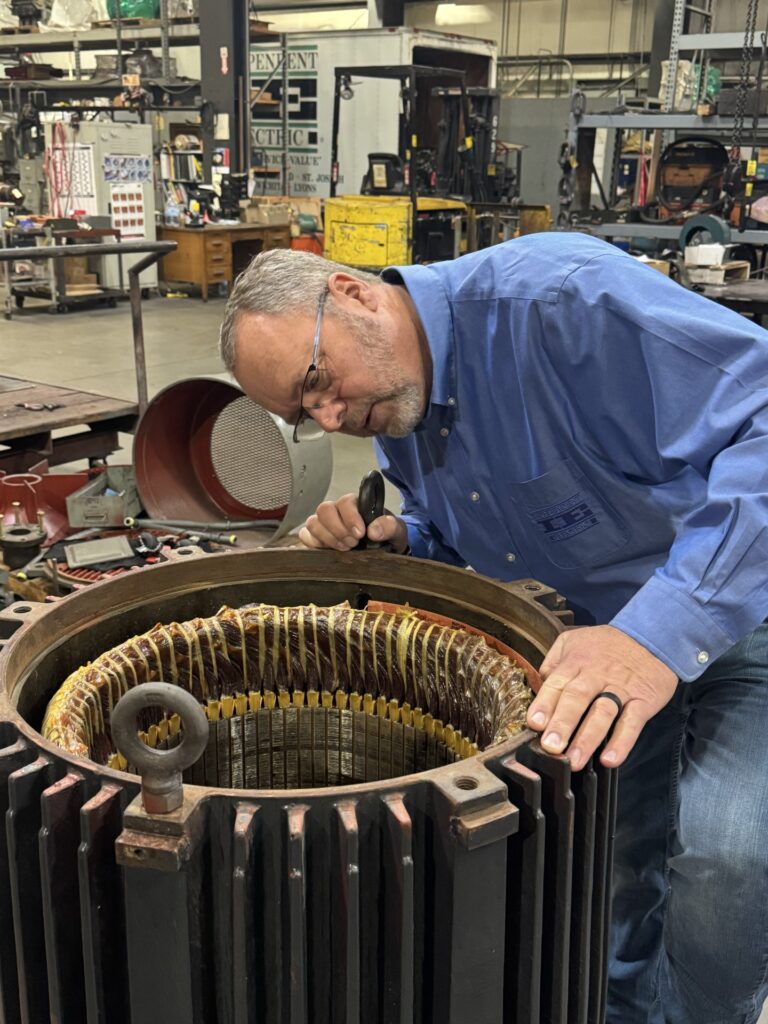
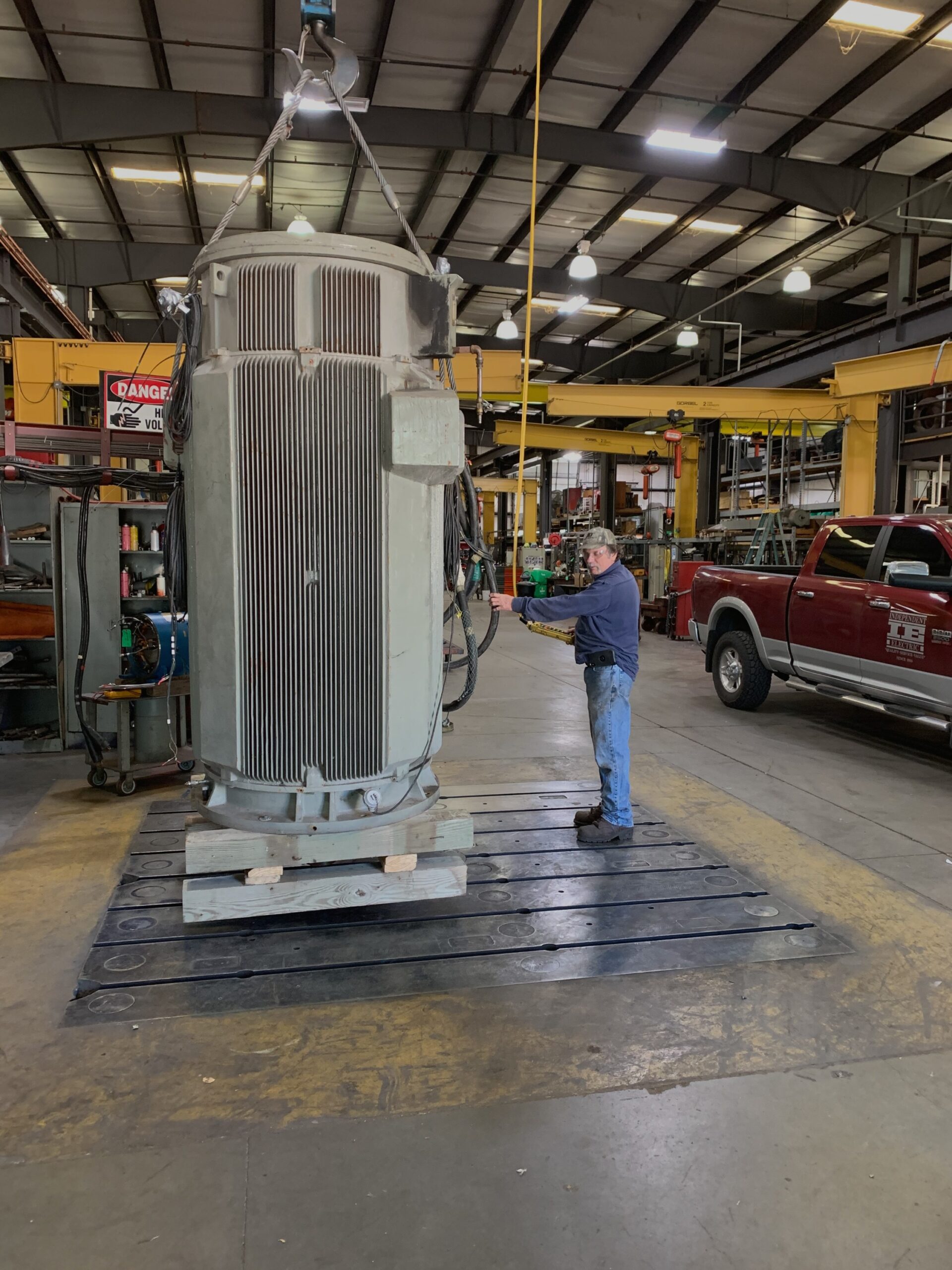
Sixty percent of motor failures can be attributed to bearing problems. That’s the dominant failure mode for industrial motors, and these failures are almost entirely preventable if you catch them early. Vibration analysis detects bearing problems, misalignment issues, and rotor imbalances months before catastrophic failure, catching problems that are undetectable by observation alone. Here’s what it prevents and what those failures cost when you don’t catch them early.
Three Critical Failures Vibration Analysis Prevents
1. Bearing Failures (The Big One)
Bearing failures cause 60% of all motor failures. And here’s what makes bearing failures particularly frustrating: they’re almost entirely preventable with proper monitoring.
Bearings don’t usually fail suddenly. They degrade gradually. Early-stage bearing wear begins months before you’d hear any unusual noise or notice any performance change. The bearing balls might start skidding instead of rolling smoothly. Wear patterns develop. But the motor keeps running, seemingly fine, while the problem gets worse.
Vibration analysis detects bearing problems at this early stage. The testing equipment measures vibration in terms of decibels. Normal bearing operation registers 0–10 decibels. When readings climb above 10 decibels, the data tells you bearing wear is developing. At 14 decibels, you’ve got a problem that needs attention.
The cost comparison:
- Planned bearing replacement: Minor repair, quick turnaround, performed during scheduled maintenance
- Catastrophic bearing failure: Extended downtime, potential damage to motor shaft and housing, emergency service premiums
- Lost production: The real cost—hours or days of unplanned downtime
2. Misalignment Issues (Cascading Damage Prevention)
When your motor isn’t properly aligned with the driven load, it creates vibration that accelerates wear on both the motor and the driven equipment. Misalignment is a problem that multiplies itself.
Vibration analysis identifies misalignment through specific vibration patterns. Different types of misalignment—angular, parallel, or combined—create different vibration signatures.
What misalignment costs when you don’t catch it:
- Accelerated bearing wear (60% of motor failures)
- Accelerated wear on driven equipment (pump, compressor, etc.)
- Coupling damage and premature failure
- Reduced efficiency
- Multiple component failures instead of a single point of correction
3. Rotor Imbalance
An unbalanced rotor creates vibration that stresses bearings and other motor components. Think of a washing machine with an unbalanced load—it shakes, vibrates, and stresses everything around it. Rotors work the same way.
Vibration analysis pinpoints rotor imbalance and its severity. The data shows whether you’re dealing with a minor balance issue that can wait until the next scheduled maintenance or a severe problem that needs immediate attention.
The Hidden Costs of Mechanical Failures
- Minor bearing replacement (planned): Bearings are consumables. Replacing them during scheduled downtime is straightforward.
- Catastrophic bearing failure (unplanned): The motor shuts down. Your line stops. What should have been a simple bearing replacement becomes a major repair—or complete motor replacement.
- Misalignment damage: You’re not just fixing one component. You’re repairing the motor AND the pump (or compressor, or fan). Two repair bills instead of one.
- Emergency repairs: They seem to always happen at 2:00 am on Saturday or during your peak production shift.
What Vibration Analysis Actually Costs (The ROI)
Vibration analysis is typically performed on a route-based schedule. Your motor service partner visits your facility quarterly, semi-annually, or annually (depending on motor criticality), tests your critical motors, and provides detailed reports showing trending data over time.
The ROI calculation is straightforward: If vibration analysis prevents even one catastrophic bearing failure on a critical motor, it pays for itself.
When Vibration Analysis Makes Sense
Focus your testing program on:
- Motors where unexpected failure halts production
- Motors approaching typical bearing replacement intervals
- Operations with expensive downtime costs
- High-value equipment
60% of Motor Failures Are Preventable
Bearing failures are the dominant failure mode for industrial motors, and they’re almost entirely preventable with vibration analysis. The choice is simple: catch bearing problems months before catastrophic failure during planned maintenance, or deal with emergency repairs during peak production.
Independent Electric has been helping maintenance teams prevent mechanical failures since 1908. Contact IE today to discuss a vibration analysis program tailored to your operation.