It’s music to your ears as you walk the floor at your facility: the steady hum of motors keeping production running. But what happens when that hum changes? When vibration increases just slightly? When a bearing starts making noise that’s not quite right?
Motors don’t just fail overnight. They give you warnings. The question is: are you reading the signs?
At Independent Electric, we’ve spent over 100 years helping Midwest manufacturers avoid catastrophic motor failures. And here’s what we’ve learned: the difference between a minor repair and a full rewind often comes down to catching warning signs early. Let’s walk through the five most common signs that your motor is trending bad.
Warning Sign #1: Changes in Sound
Your ears are great diagnostic tools. When a motor’s sound changes, something mechanical or electrical has shifted.
Electrical issues create high-pitched sounds—ringing, humming that changes pitch, or crackling and arcing. Mechanical problems sound different: knocking, grinding, or that rough metal-to-metal scraping that reminds you of a failing wheel bearing in your car.
Here’s a pro tip from our service team: compare your suspect motor to a similar one nearby. If one sounds louder, rougher, or has different tones than a comparable motor, that’s a warning sign that something’s wrong.
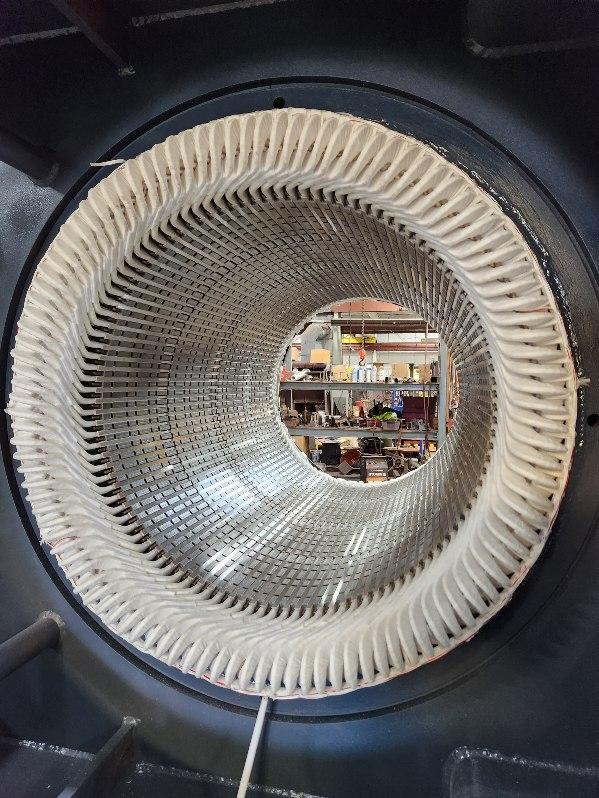
The type of noise matters because it can give you an insight into what’s failing. Most motors fail because of mechanical issues. But when mechanical problems get bad enough—when a bearing completely fails and the rotor drops—it starts dragging on the stator iron and blows up the winding.
Warning Sign #2: Increased Vibration
Vibration signals what’s happening inside your motor. When vibration increases or changes character, pay attention.
You might notice excessive rocking or shaking. You might feel vibration that’s stronger than it used to be. In severe cases, you can actually see the motor vibrating without touching it.
Vibration usually points to one of three problems: bearing wear (which accounts for about 60% of motor failures), misalignment between the motor and driven equipment, or imbalance in the rotor or driven equipment.
The good news: vibration problems are detectable through testing long before you can feel them by hand. Vibration analysis measures bearing sounds in decibels and compares them to thresholds that predict failure. Healthy bearings run in the 0-10 decibel range. When readings hit 14 decibels or higher, that bearing is starting to fail.
Warning Sign #3: Temperature Changes
Heat indicates friction, and friction isn’t good for electric motors. Temperature warnings come in several forms.
- What you can see: Paint discoloration around bearing housings tells you that the bearing has been running hot. Visible heat shimmer when the motor is running suggests temperatures beyond normal operating range. If the motor is unusually hot to the touch compared to similar equipment, it’s time to investigate.
- What monitoring systems tell you: Larger motors often have RTDs (resistance temperature detectors) installed in windings and on bearings. When the temperature crosses into the alarm zone, the system warns you. If it climbs into the danger zone, it shuts the motor down to prevent winding damage.
Temperature and lubrication have an interesting relationship. When bearing temperature rises, you might add grease to cool it down. But here’s the catch: too much grease can actually cause the temperature to spike.
Warning Sign #4: Performance Drop
Sometimes the motor keeps running, but the application tells you something’s wrong. Watch for:
- The motor struggles to reach full speed under normal load conditions.
- Power output drops even though you know the load hasn’t changed.
- Equipment starts underperforming: pumps move less fluid, fans move less air, conveyors run slower than usual.
Your electrical protection systems also know something’s wrong. Starter trips become more frequent. Thermal overload protection engages even though operating conditions seem normal.
Warning Sign #5: Visual Damage and Leakage
Some problems announce themselves visually. Check for oil or grease leaking from bearing seals. Look for moisture accumulation around the motor housing. Watch for debris buildup that can block cooling.
Some visual signs demand immediate attention: melted or damaged wiring around connection points, insulation melting off lead wires, and discolored connection points indicating arcing or excessive current draw. And if you see smoke, that motor needs more than a quick fix!
Understanding the Progression
- Early Warning (Minor Repair Territory): Slight noise changes, minor vibration increases. This is when a bearing replacement prevents bigger problems.
- Trending Bad (Still Preventable): Indicators worsen consistently over weeks or months. You’re still in control of timing.
- Critical (Major Repair Needed): Abnormal noise is apparent to anyone nearby. Excessive vibration is visible or easily felt.
- Catastrophic (Complete Failure): Smoke, burning smell, won’t start or stay running.
The economics tell the story: a $1,000 bearing replacement beats a $10,000 rewind, which beats $100,000 in lost production.
What to Do When You Spot Warning Signs
Don’t ignore what your motors are telling you. Document what you’re observing, compare the suspect motor to similar equipment, and check for obvious mechanical issues. Then bring in professional assessment.
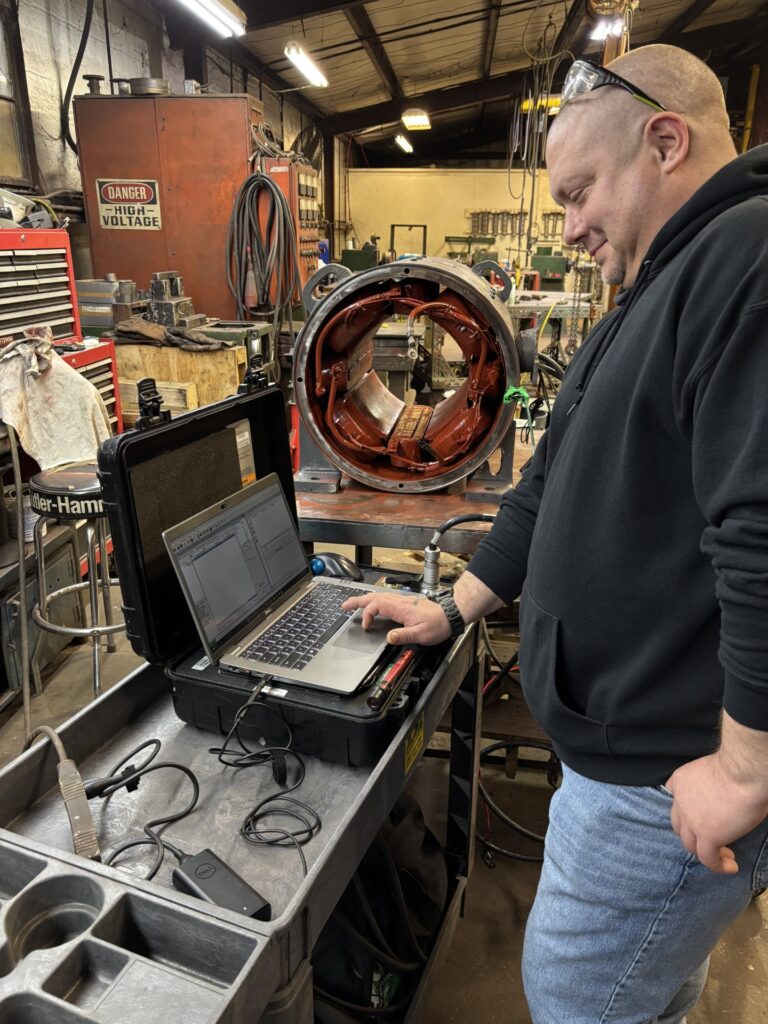
At Independent Electric, we offer a free 24-hour turnaround on initial evaluations. PdMA testing reveals electrical health, while vibration analysis assesses mechanical condition. Contact us to schedule your assessment.