Independent Electric has been diagnosing and repairing electric motors since 1908. We’ve learned that the best maintenance managers don’t just react to problems—they partner with experts who can spot issues before they become emergencies. Our shop team put this article together to explain the two critical testing methods used to diagnose electric motor issues so you can have confident conversations with your motor service partner about protecting your most critical equipment.
What is PdMA Testing?
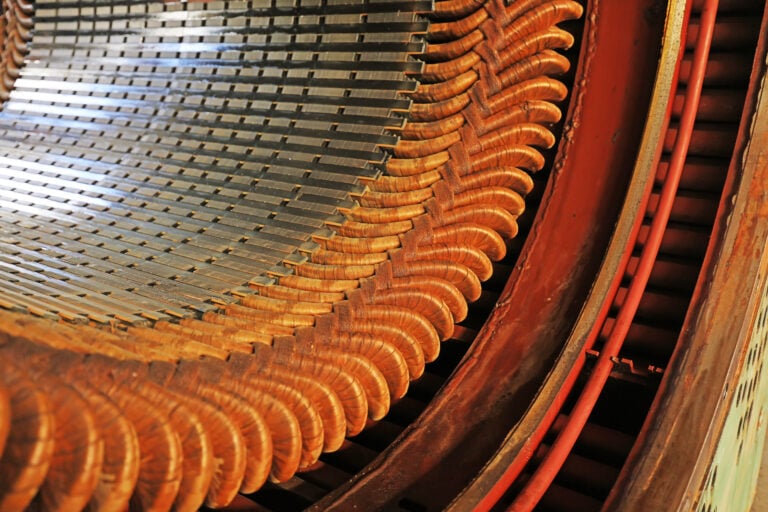
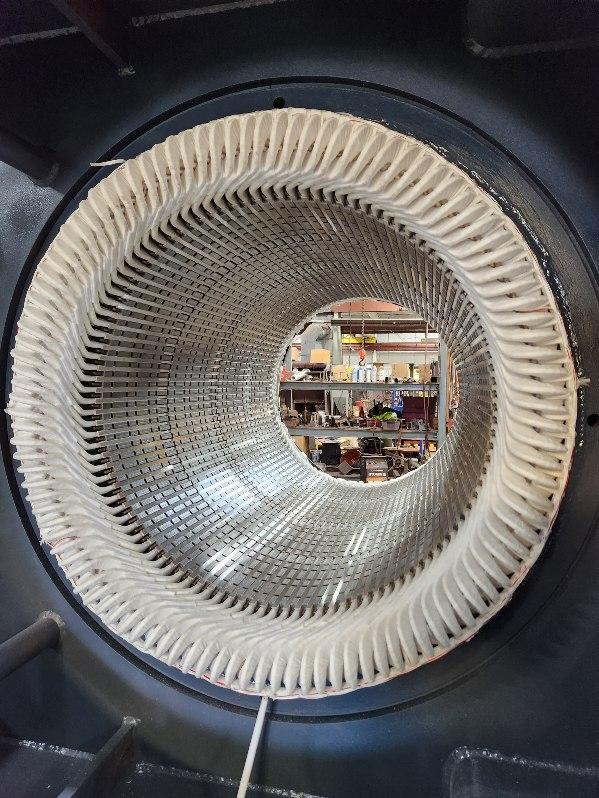
PdMA stands for Predictive Maintenance Assessment, and it’s all about evaluating the electrical health of your motors. Think of it as a comprehensive checkup for everything electrical inside the motor—the windings, the rotor condition, the balance between phases, and the air gap symmetry between the rotor and stator.
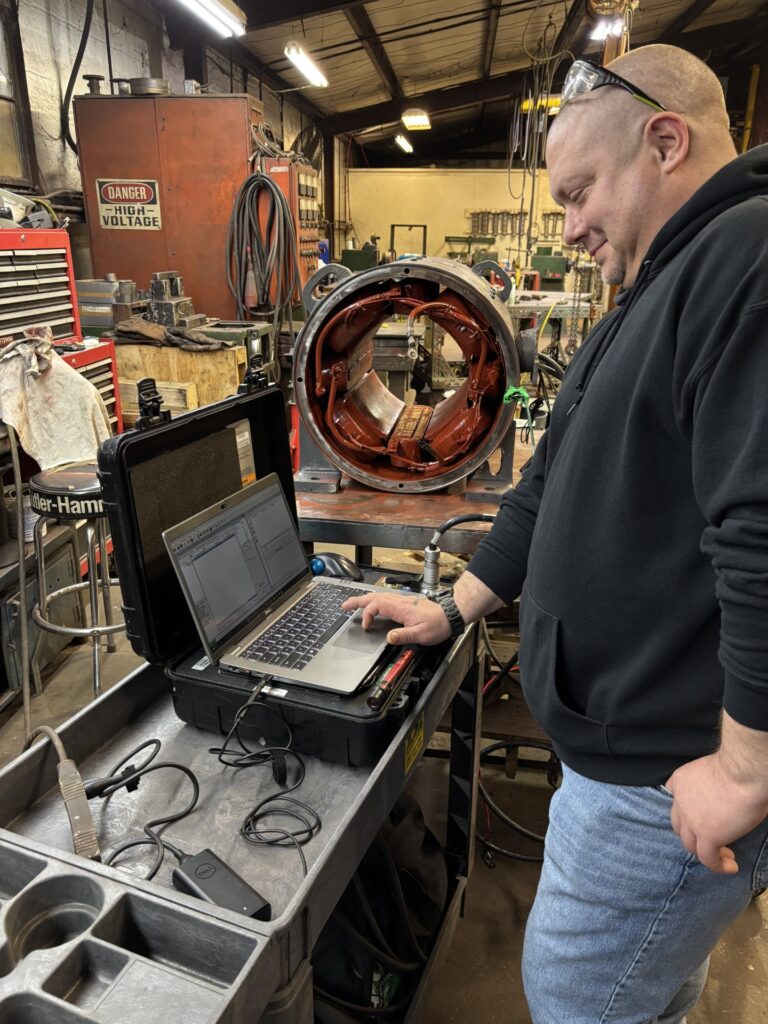
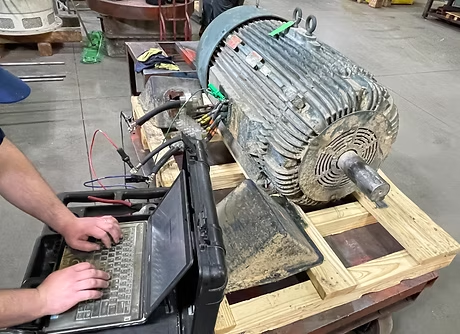
Your motor service partner uses specialized equipment to capture this data. PdMA can be performed either online (while the motor is running under load) or offline (when the motor is at rest). Online testing is especially useful because it shows how your motor performs under actual working conditions.
What PdMA Testing Detects
- Insulation breakdown in windings: When the insulation around motor windings begins to degrade, it can eventually lead to shorts that completely destroy the motor. PdMA catches this degradation early, often months before failure.
- Rotor bar damage: When these bars crack or break, rotation ability suffers. PdMA can identify these issues even when the motor seems to be running normally.
- Phase imbalances: Three-phase motors need all three phases pulling evenly. PdMA identifies these imbalances before they cause bigger problems.
- Air gap issues: The air gap between the rotor and stator needs to be symmetrical and within specific ranges. PdMA measures this precisely.
When to Discuss PdMA Testing with Your Service Partner
- Critical three-phase motors: If motor failure would halt production or cause significant operational problems
- New or newly repaired motors: Establishing baselines gives you a reference point
- Route-based maintenance programs: PdMA is most valuable when performed regularly
- Investigating performance issues: When a motor isn’t performing as expected but hasn’t failed yet
- Capital planning: Before making major decisions about repair versus replacement
What is Vibration Analysis?
While PdMA focuses on electrical health, vibration analysis assesses the mechanical condition of your motors. It detects physical and mechanical issues through precise vibration measurement using sophisticated analyzers that can identify problems completely invisible to the human eye and ear.
What Vibration Analysis Detects
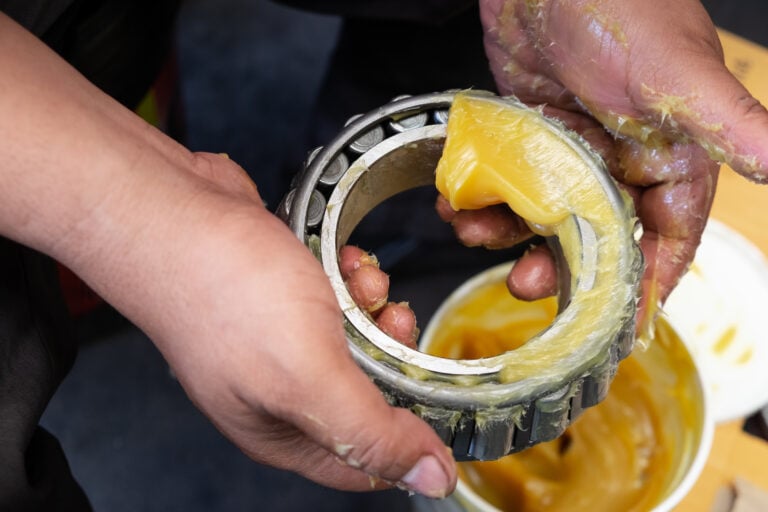
Bearing problems (the big one): Sixty percent of motor failures trace back to bearing problems. Vibration analysis can detect:
- Early-stage bearing wear months before you’d hear or see any problems
- Specific bearing condition data showing which bearing is degrading
- Whether bearings are rolling properly or starting to skid
- Degradation trending over time so you can plan replacement timing
Misalignment: When your motor isn’t properly aligned with the driven load, it creates vibration that accelerates wear on both the motor and the driven equipment.
Rotor imbalance: An unbalanced rotor creates vibration that stresses bearings and other components.
PdMA vs. Vibration Analysis: Key Differences at a Glance
| PdMA Testing | Vibration Analysis | |
|---|---|---|
| Primary Focus | Electrical health | Mechanical health |
| What It Catches | Winding failures, rotor electrical issues, phase imbalances | Bearing failures, misalignment, balance issues |
| Testing Method | Online (under load) or offline | Online or offline |
| Best For | Three-phase motors, electrical diagnostics, rotor assessment | All motors, mechanical diagnostics, bearing monitoring |
| Your Benefit | Prevents electrical failures and shorts | Prevents bearing failures (60% of motor issues) |
Why Both Tests Matter: The Complete Health Picture
About 60% of motor failures trace back to bearing problems—that’s mechanical, caught by vibration analysis. But the remaining 40% of failures often stem from electrical issues like winding insulation breakdown, rotor problems, or phase imbalances—all caught by PdMA testing.
If you only do vibration analysis, you’re blind to electrical problems developing inside the motor. If you only do PdMA, you miss the bearing degradation that causes most failures. Using both tests provides the comprehensive assessment you need for critical equipment.
Making the Right Testing Choice for Your Operation
The right testing strategy depends on your specific situation. Key questions to discuss with your motor service partner:
For PdMA Testing:
- Which of our three-phase motors are most critical to production?
- Do we have baseline electrical data on our critical equipment?
- What’s the history of electrical failures versus mechanical failures in our facility?
For Vibration Analysis:
- Which motor failures would halt our entire production line?
- Are our bearings approaching typical replacement intervals?
- What does an hour of unplanned downtime cost our operation?
Partner with Experts Who Speak Your Language
Route-based testing programs provide the trending data that makes predictive maintenance actually predictive. A single test tells you about the state of your motor today. A series of tests over time tells you the story of how motor health is changing and lets you forecast when problems might occur.