Most short lines don’t carry a spare traction motor on the shelf. Equipment runs until it fails, and then the scramble begins. That’s the problem a traction motor exchange program solves: instead of waiting weeks for your own motor to come back rebuilt, you get a working unit right away while your damaged one goes off for repair on its own schedule. How a shop builds that program varies more than most railroads expect.
Here’s what goes into a traction motor exchange program, and what’s worth checking before you hand your locomotives to a partner.
What a Traction Motor Exchange Program Is
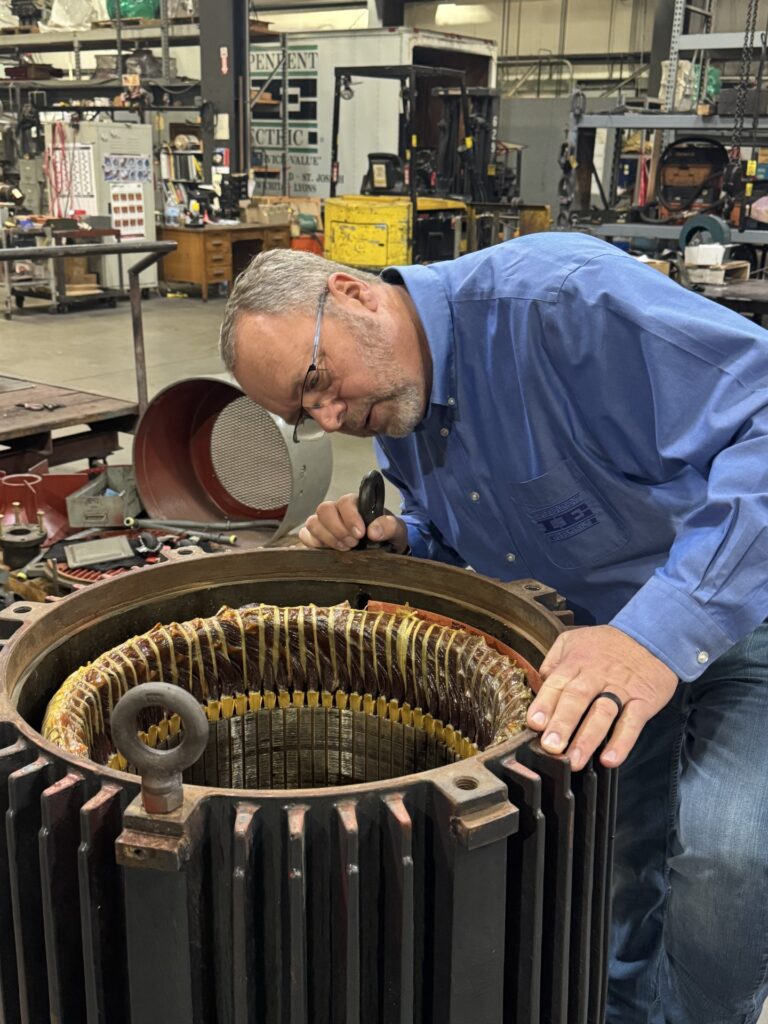
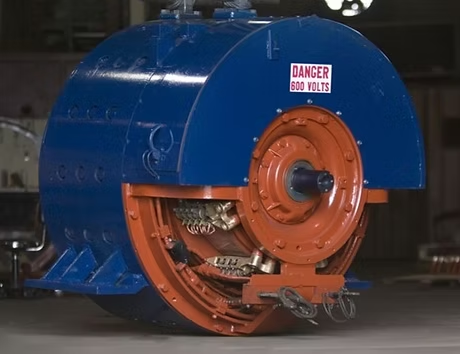
Say your motor fails. You ship us the core, the worn-out or burned-out unit that needs work. In return, we send you a traction motor that’s ready to run. Customers close to our shop can often get that exchange the same day..
When a core comes in, we resolve it one of three ways. Under our UTEX/Core Exchange program, we send a rebuilt unit out right away in place of the one you’re sending in, so a locomotive doesn’t sit waiting on its own motor. A repair and return means we fix your specific unit and ship that exact motor back to you, which works fine if you can wait out the turnaround. An outright sale comes into play when your core is too far gone to justify repairing, so you buy a rebuilt unit from us instead. Which path fits depends on the core itself and how much downtime you can absorb, and we walk that assessment with you either way.
Why Short Line Railroads Depend on Exchange Programs More Than Most
Short lines run on tight margins. Diesel prices swing hard for these operations, and competition between railroads for the same freight is fierce. Every maintenance dollar gets scrutinized before it’s spent.
Many of the short line railroads we work with don’t have the budget for a formal maintenance program or an inventory of spares. When a motor goes down, there’s rarely a backup already on hand.
It also means DC traction motor rebuild work is a narrow specialty, and few shops around the country do it well. We’ve talked with short line operators who were shipping traction motors from Washington state to a shop in Florida just to get the work done, adding weeks of transit time on top of the repair itself, for a part that keeps a locomotive parked the entire time.
Traction Motor Exchange Program Checklist: What To Look For in a Partner
Shops that offer an exchange program run it in very different ways. Here’s what separates a program that saves you downtime from one that just sounds good on a sales call.
- On-shelf inventory, ready to ship today. Ask whether the shop already has rebuilt units sitting on the shelf, ready to ship the moment your core arrives. We keep specific units on hand dedicated to individual customers, so there’s no delay waiting for a rebuild to start from scratch.
- Regional turnaround. Because DC traction motor rebuild work is such a specialized skill, some short lines end up shipping motors across the country. Ask where the shop sits relative to your railroad. A same-day exchange or a short truck run beats waiting on a motor that has to cross several state lines and back.
- Pricing you can plan around. A legitimate program quotes a baseline cleanup price up front. That price covers the teardown and cleaning. New bearings and seals are part of it. So are replacement brushes. From there, every component gets tested before the unit goes back together and onto the shelf. Additional charges, called adders, only apply if testing turns up something like a bad field coil or damaged leads that need to be replaced. A trustworthy shop makes that clear before any invoice arrives.
- Testing that goes deeper than a trackside check. Ask what diagnostic testing the shop runs on an incoming core, such as insulation resistance testing, before it even quotes the job. A thorough shop often catches problems your own crew wouldn’t have flagged in the field.
- Credentials behind the work. Confirm the shop holds EASA accreditation and follows AAR-aligned documentation, repair pro calibration standards. That level of process discipline is what keeps a rebuilt traction motor performing like one, years down the line.
A Partner That Helps You Build Your Own Inventory
The best partners do more than process exchanges one at a time. They help you build your own reserve.
A lot of railroads have a boneyard: a lot full of retired locomotives and spare parts that piled up over the years and never got a second look. We’ve walked through a customer’s boneyard, unit by unit, and sorted out what could be repaired and what belonged in scrap. A few units needed a closer look back at our shop before we could make the call either way. That work turned equipment that had been sitting idle into working inventory the customer now draws on.
It’s a service we don’t see other shops actively marketing, even though almost every railroad has some version of a boneyard sitting around. Treat it as the proactive half of the equation. A core exchange handles the failure that already happened. A boneyard evaluation gets you ahead of the next one.
Independent Electric’s Track Record With Traction Motor Exchange Programs
One of our longtime rail customers makes the point well. What started as a new relationship a few years ago has grown into one of our largest rail accounts. Before working with us, this customer’s traction motors were routed through an out-of-region shop, and the quality problems that came with that arrangement were part of what brought them to Independent Electric in the first place.
We’re also the only EASA repair shop in Kansas or Missouri that repairs traction motors, which is why regional turnaround matters as much as it does for a lot of short lines in this part of the country.
Every rebuilt unit we send out is backed by our EASA accreditation and an AAR-aligned repair process, the same standards that guide our work across the rest of a locomotive’s rotating equipment, from generators to cooling fans.
Partner With a Traction Motor Exchange Program Built for Short Lines
A traction motor exchange program only works if the partner behind it can deliver on what it promises. When it’s built right, a motor failure stops being a stretch of idle track and becomes a same-day swap.
If your short line is ready to talk through what a dedicated exchange arrangement could look like, built on the same model described above, connect with a rail expert. You can also see the full range of our railroad services before you reach out.